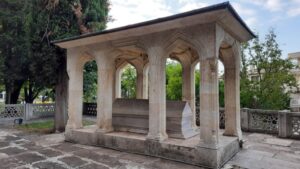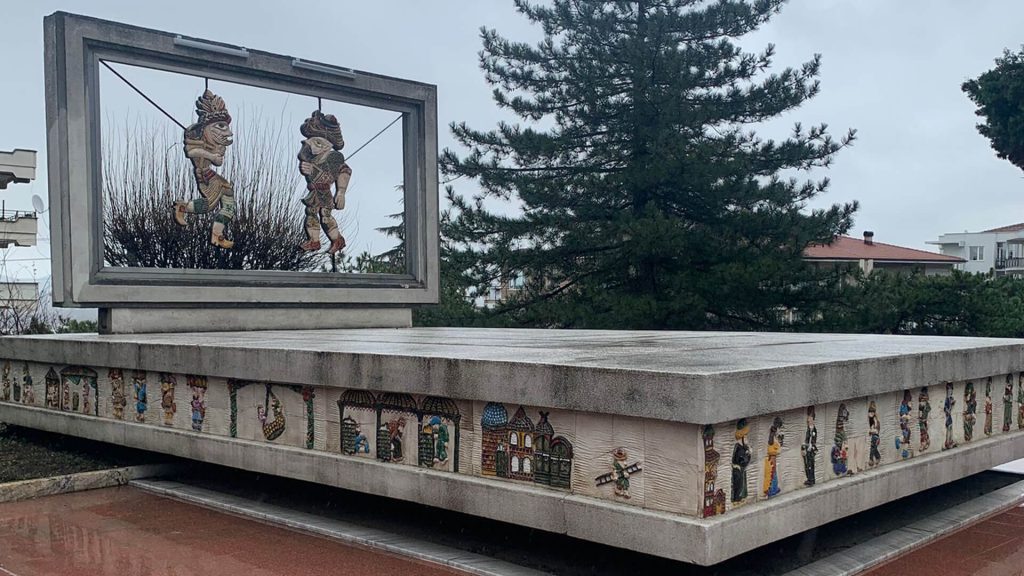
Haciva and Karagöz Monument, before going to the Hüdavendigar Social Complex, there is a symbolic grave built in memory of Hacivat and Karagöz, opposite the Süleyman Çelebi grave on the Çekirge road. The original tombstone, which was broken during the Greek occupation, was kept by the people of Bursa and delivered to the Bursa Museum after the occupation.
Shadow play, also known as ‘Karagöz Play’, is an important part of our culture. The heroes of the play are from Bursa, and Şeyh Küşteri, who performs the play behind a white screen stretched across the frame, is one of the well-known scholars from Bursa. A sad incident that is said to have happened to Hacivat and Karagöz during the construction of the Grand Mosque has been talked about for centuries:
Karagöz is a blacksmith working in the construction of the Grand Mosque. His humor and quick wit attract the attention of the mosque’s architect, Hacı İvaz Ağa. Haci İvaz Ağa (Hacivat), who according to some rumors is a bricklayer, constantly teases Karagöz and jokes with him. Their festive fights and witty conversations are watched with admiration by the workers and even make them unable to work due to their laughter.
Why Were Hacivat and Karagöz Killed?
Learning that the construction of the mosque was delayed, Yıldırım Bayezid orders both of them to be beheaded because they caused the delay in the construction. Hacı İvaz Ağa (Hacivat) manages to escape, but he is caught in Çekirge, where the Karagöz monument is located, and they kill him at the foot of the minaret. According to rumor, Hacı İvaz Ağa was also killed by bandits on the way to Mecca.
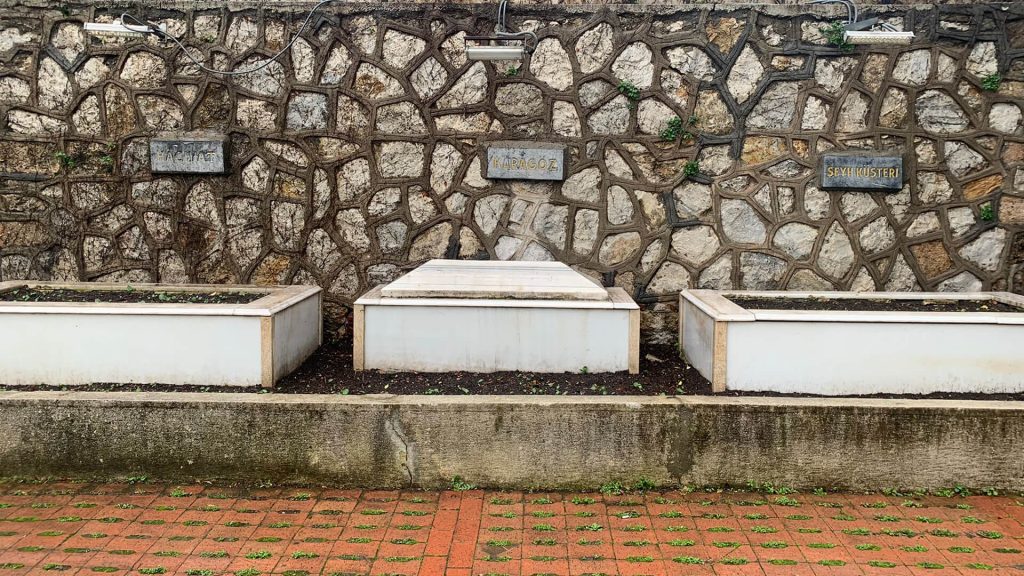
Bayezid, who later regretted it, asks Sheikh Küşteri to tell about these two friends. Thereupon, after Sheikh Küşteri mixes ash and olive oil in a bowl behind a white cheesecloth and burns it, he takes his sandals in his hands and portrays the humor and quarrels of Hacivat and Karagöz behind the cheesecloth with various movements.
The tradition of shadow play continues today in the Karagöz House, located right across from the Karagöz monument. It is rumored that Karagöz lived during the period of Orhan Gazi.
Source: Bursa Osmangazi Municipality, Trace Of An Empire Osmangazi